Ronda in Southern Spain

Hotels, Nature, News

Iglesia de Nuestro Padre Jesús Ronda

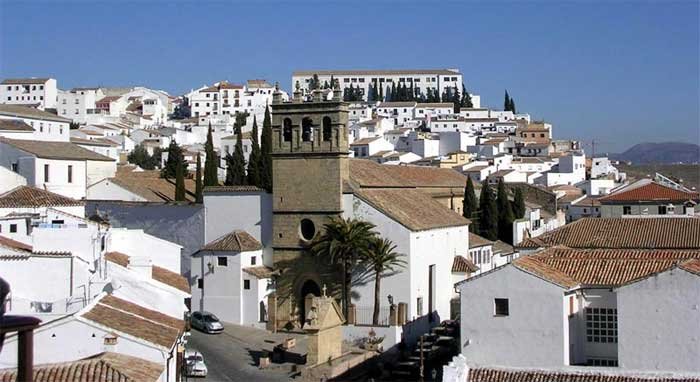
One of Ronda’s most popular churches, Padre Jesús has a beautiful gothic bell tower and is next to Ocho Caños.

Padre Jesús Church, Ronda

Padre Jesús Church, Ronda

Originally built at the end of the 15th century and beginning of the 16th century the church was dedicated to Santa Cecilia who at the time of the reconquest was enjoying a great deal of popularity as the patron saint of musicians and churches.

The tower and entrance of Padre Jesús is gothic having been part of the original church, the remainder is renaissance period.

In fact the street where Nuestro Padre Jesús is located is still known as Calle Santa Cecilia, though these days the church itself has been rededicated to Our Father Jesus. Part of every tour of Ronda, Nuestro Padre Jesus is not open to the public, it is a working parish church so is only open for mass, confession, and private prayer.

Every Friday a special service is held in honour of the image of Jesus Christ that is kept permanently in this church. The tower is part of the original gothic church built after the reconquest, but the remainder of the church was rebuilt in 1755 in renaissance style.

Vicente Espinel, one of Ronda’s most famous sons who was a poet, musician and philosopher was baptised in this very church. So too were Rios Rosas, a politician in the Spanish national government, and perhaps most famous of them all, Cayetano Ordóñez, otherwise known as Niño de La Palma, the founder of the second great bullfighting dynasty in Ronda.

In our photo the Ocho Caños fountain is visible in fron of the church. Look out for the statue of Aniya la Gitana between the church and the school next to the church, both are on Calle Santa Cecilia. Aniya was during the late 19th and early 20th century considered the greatest female flamenco singer and guitarist in Spain, and she was born here in Ronda.

GPS Location
Latitude: 36.740423 (36° 44′ 25.52” N)
Longitude: -5.162780 (5° 9′ 46.01” W)

Leave Comment

Ronda

Ronda is one of Spain's most visited cities for good reason, our little city is very compact, in fact from arriving in Ronda, to seeing the Real Maestranza bullring, the Puente Nuevo, the many beautiful churches, our museums, or the wonderful coffee shops and tapas bars, we have it all within a short 30 minute walk.

Of course, most visitors need at least 2 or 3 days to see everything because a lot can be packed into your time in Ronda. Stay in one of Ronda’s many excellent hotels, with a choice of restaurant covering tapas in a local bar, menu del dia, or a la carte menu.

A walking tour of Ronda is a pleasant and enjoyable way to spend a lazy few hours, almost everything you could want to see in Ronda is no more than 200-300 metres from the new bridge.

Ronda Today is the Serranía de Ronda's only daily English language news source, our we take pride in providing Ronda News as it happens.

Stay in Ronda

As one of the most visited cities in Spain, Ronda has a fantastic selection of hotels, hostels, guesthouses, and self-catered accommodation guaranteed to suit all tastes.

Whether it's just one night, or several weeks that you need we can help you find somewhere to rest your weary bones while you're in the city of dreams - La Ciudad Soñada.

Join great names like Orson Welles, Earnest Hemingway, Rainer Rilke, James Joyce, Jorge Luis Borges, Madonna, or Jamie Oliver who have enjoyed their time in Ronda.

Visitors who plan to make Ronda their new home should check out our property section, where we talk about some of the gotchas that can occur. Forewarned is forearmed.

Why Visit Ronda

A small city perched on a seemingly precarious platform of rock, Ronda is in fact an impregnable fortress only defeated in battle through trickery, and during the reconquest with modern (for the era) rock blasting cannon.

The mountains and valleys of the Serranía de Ronda are home to a tough breed of people, yet in Ronda these people are refined, some are gentry, some gypsies, others are just common folk, but all proudly call themselves Rondeños.

These days the population of Ronda is a little over 35,000 souls; big enough to offer all the essential services, but not big enough to suffer traffic problems or big city woes.

Rondeños have played a pivotal role in shaping Andalucía and modern Spain, and the city has hosted some of the great names of politics, the arts, education, and played her role in military events.

An hour from the Costa del Sol, Ronda is too far away to be heavily influenced by events on the coast, yet still close enough to benefit from the economic strength that tourism brings to Southern Spain. At a height of 723m, Ronda has a cooler year round temperature than the coast, making life in Ronda altogether more agreeable than other Andalucían cities.

Serranía de Ronda

Ronda is the biggest city in northern Malaga province, and the closest city to many of the smaller villages in Cadiz province, making Ronda an ideal base for exploring the Serrania.

Within a few kilometres of Ronda are some of the most visited Pueblos Blancos, the famous white villages of Andalucia, Setenil de las Bodegas, Grazalema, Gaucín, Juzcar, Benalauria, Montejaque, Teba, Cortes de la Frontera, Igualeja, the list goes on...

As well, Ronda is close to three natural parques, the Grazalema park, Alcornocales park, and the Sierra de las Nieves park. The Serranía is also home to pre-historic cave paintings at Benaojan, Neolithic dolmens at Montecorto, and of course, the Roman city of Acinipo.

The countryside of the Serranía is described as unique, in fact universally important. Many endemic species make their home here, including the pre ice age Pinsapa pine tree, and numerous orchids only found on our mountains.