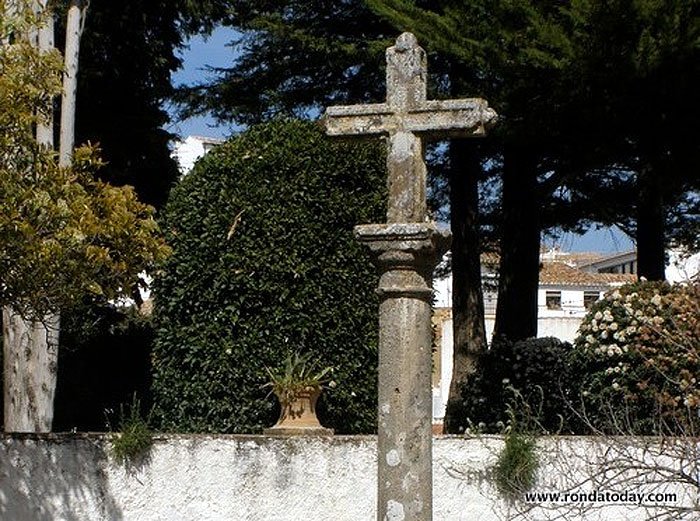
Ronda is famous for it’s churches built after the reconquest as Catholic Spain asserted it’s control over the formerly Muslim city. Four of the many churches in Ronda are especially noted for their architecture or the story behind them, and all are part of every great tour of Ronda.
Christianity in Ronda began with Visigothic control of Iberia after the collapse of the Roman Empire in the 5th century, and quickly became the dominant faith. Arab invaders entered Iberia and overran the Visigoths beginning in 711 AD, and until 1485 Ronda was a Muslim stronghold alternating between liberal interpretations of Muslim faith and the more conservative Sharia versions.
At times Ronda was a centre of enlightenment with many Islamic poets and scholars born in Ronda although most found fame and fortune in other cities such as Córdoba, Baghdad, Cairo, or the Berber courts in North Africa.
Despite nearly 800 years as a Muslim city, Christianity in Ronda was never fully extinguished, and if you have a bit of time to spare, a trip to the Mozarab cave church ‘Virgen de la Cabeza’ is well worth your time though it is never open to the public.
None of the Muslim mosques of Ronda survived the reconquest, all were destroyed and Christian churches built on their foundations. Part of a minaret from one of Ronda’s mosques still stands, the San Sebastian Minaret, the lower third is Moorish, whilst the top two thirds are Christian.
Inside Santa Maria la Mayor it is possible to see part of the original Mosque which stood in its place. A single column from the mosque is located behind the alter. This same church was the original location of Julius Caesars Temple of Diana, which subsequently became a Visigothic church prior to the Muslim invasion.
Many Rondeños are proud of their Catholic faith, and will make the sign of the cross against their chests when passing a church entrance, as too will nuns walking through town, although you may also see a nun stop at the entrance to a church she is passing and briefly bow before continuing on her way.
There are several convents in Ronda, all of which are still home to nuns. There are also private convents for retired priests and nuns, though these are strictly off limits to all but family of the residents. The most famous convent in Ronda, The Convent of Santo Domingo, is however no longer used as such. In fact the building is owned by the Ayuntamiento and used as the city exhbition centre.
Ronda Today
Everything you need to know before you visit Ronda “The city of dreams” in Andalucia. https://rondatoday.com/
Wildside Holidays – Spain
Take a trip on the Wildside! Discover the wildlife and nature of Spain, its Natural and National Parks and find the top wildlife, activity and walking holiday companies.

I’ve been living in this lovely area of Western Andalucia for the last 20 years or so and dedicate most of my time to the running of English language tourist information websites for the towns of Cádiz, Ronda, Grazalema, the famous or infamous Caminito del Rey, and also Wildside Holidays, which promotes sustainable and eco-friendly businesses running wildlife and walking holidays in Spain. My articles contain affiliate links that will help you reserve a hotel, bus, train or activity in the area. You don’t pay more, but by using them you do support this website. Thankyou!