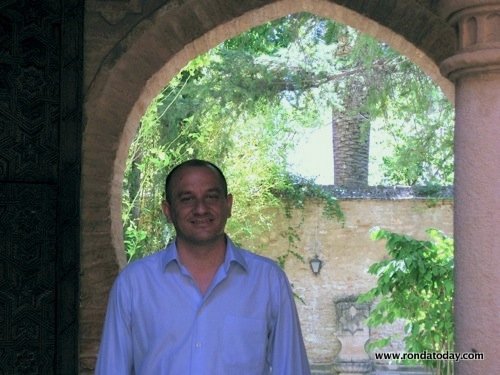
The tourism industry is widely acknowledged to be the most important in Ronda, with the city receiving millions of visitors per year who come to admire Ronda’s many important cultural and historic monuments. Ronda Today talked to Francisco Cañestro, Councillor for Tourism about his goals over the coming year.
A recent report commissioned by the town hall was quite critical of accessibility in Ronda, not only for people with disabilities, but also for the aged and holiday makers with an injury. The majority of Ronda’s monuments, hotels, restaurants and public streets will need to be renovated to bring them up to EU standards for accessibility.
Cañestro recently took over as councillor and says he was overwhelmed with how large the task is, though he is pressing ahead, and has recently officiated at the re-opening of the Arab Baths after extensive modifications.
A budget of 50 million Euros has been set aside over the next 12 months for accessibility, which includes ramps and footpaths at Acinipo, rebuilding public streets and footpaths in the old city, creating wheelchair access ramps on footpaths, upgrading certain buildings to allow disabled access, including removable ramps in buildings that cannot be modified.
In addition, most of the information signs scattered around Ronda are being written in Braille so that blind visitors can enjoy more of the city than previously. All in all, these efforts are intended to meet and exceed accessibility guidelines and confirms the importance of tourism in Ronda.
Asked about other projects, Cañestro was quick to point out that refurbishment of the Paseo de los Ingleses and the Jardines de Cuenca are on track for completion by the end of the year, and will restore these two dilapidated parks, not just for the enjoyment of visitors, but also to improve their photographs.
Taking a longer term view, the councillor confirmed to Ronda Today that the long term objective for Ronda Tourism is to promote Ronda as a destination for families wanting a 3-4 day break. This is in marked contrast to previous councillors who have intimated that day trippers will always form the bulk of visitors to the city.
Whilst many would agree that day trippers are an important group of visitors to Ronda, their value to the city is minimal with most spending only a few Euros, contrasted with families who book hotel accommodation, hire cars, eat in restaurants, visit our museums, and travel to nearby villages. A single family staying in Ronda for 4 days will usually spend as much as a coach load of day trippers, and this fact is not lost on Cañestro.
To further promote the city, the town hall and the Junta de Andalucía are working to ensure that Ronda is featured prominently as a quality vacation destination. To that end the Andalucían Tourist Board will be restructuring their advertising to highlight the attractions of the Serranía de Ronda.
Finally, we asked Cañestro about plans for the Serranía de Ronda to be recognised as a UN World Heritage Site of Universal Importance, and as expected, the 22 town halls of the Serranía and the Málaga provincial council haven’t been able to agree on funding allocation and representation, though the Junta de Andalucía is said to be keen to submit the Serranía for consideration.
Despite the apparent slow changes, Cañestro is keen to push forward with projects, and welcomes the input of tourism operators. Ronda Today isn’t able to predict what will happen after May when the next municipal election is held, though in discussions with PSOE, PP, and PA, there seems to be broad consensus that tourism promotion must focus on vacationers instead of day trippers.

I’ve been living in this lovely area of Western Andalucia for the last 20 years or so and dedicate most of my time to the running of English language tourist information websites for the towns of Cádiz, Ronda, Grazalema, the famous or infamous Caminito del Rey, and also Wildside Holidays, which promotes sustainable and eco-friendly businesses running wildlife and walking holidays in Spain. My articles contain affiliate links that will help you reserve a hotel, bus, train or activity in the area. You don’t pay more, but by using them you do support this website. Thankyou!