The museums of Ronda are a delightful way to spend a few hours for both holiday makers and residents alike. Children will love the Lara Museum, while adults may prefer the museum of wine. Art aficionados will positively love the collection of Joaquin Peinado.
Ronda is a town with a lot of history and culture, and its museums reflect that. There are museums for different interests and tastes, such as art, antiques, bullfighting, hunting and local history. Some of the museums are located in historic buildings that are worth seeing by themselves, such as the Palacio de Mondragon or the bullring.
Some of the museums offer a glimpse into Ronda’s past and present, such as the Museo Municipal or the Museo Joaquin Peinado. All of them are worth visiting if you want to learn more about Ronda and its culture.
The VoiceMap GPS Audio Guide for Ronda
Information about some of the Museums of Ronda is included in the VoiceMap GPS Audio Guide for Ronda.

Discover the town that cured German poet Rainer Maria Rilke’s writer’s block. “I have searched everywhere for the ‘city of dreams,” he wrote, “and found it here, in Ronda”. Take in the same sights that inspired him on this walking tour from the Lady Goyesca Statue in the Alameda del Tajo garden, over the world-famous Puente Nuevo de Ronda to the old town and back.
On the way, you’ll pass two breathtaking lookout points, the Mirador de Ronda and the Mirador de Aldehuela. As we leave the new town behind us and enter the old, you’ll visit Ronda’s former border at the top of Puerta de Almocábar, and quake in the boots of history’s soldiers as you imagine approaching armies. From there you’ll follow the old defensive wall to the Arab Baths and the Puente Viejo bridge, before making your way back over Puente Nuevo. The tour ends in front of Plaza de Toros, the Bullring of the Royal Cavalry of Ronda, which was the country’s very first.
https://voicemap.me/tour/ronda/ronda-andalucia-s-city-of-dreams-a-walking-tour
Ronda Municipal Museum.

Located in the historic Mondragon Palace (Palacio de Mondragon), the Municipal Museum of Ronda details Rondas history from the stone age to the present time with some very well made exhibits such as the Pileta Cave reconstruction, the stone age hut, iron age technology including sword making, the Roman period with an important exhibit on Acinipo, Moorish Ronda including a detailed exhibit of Arab funeral rites, and a very interesting display on life in Ronda’s heyday, the 17th and 18th centuries.
Would you like to practice your Spanish? Read this article translated into Spanish here…
Real Maestranza Bullfighting and Cavalry Museum.
“Everything you wanted to know about bullfighting but were afraid to ask” is how this museum should be described. The Real Maestranza has a long history since 1572 of training cavalry officers for the Spanish Crown, and it was here that the Romero family created the modern Rondeño form of bullfighting, and here too that the Ordoñez family became celebrities.
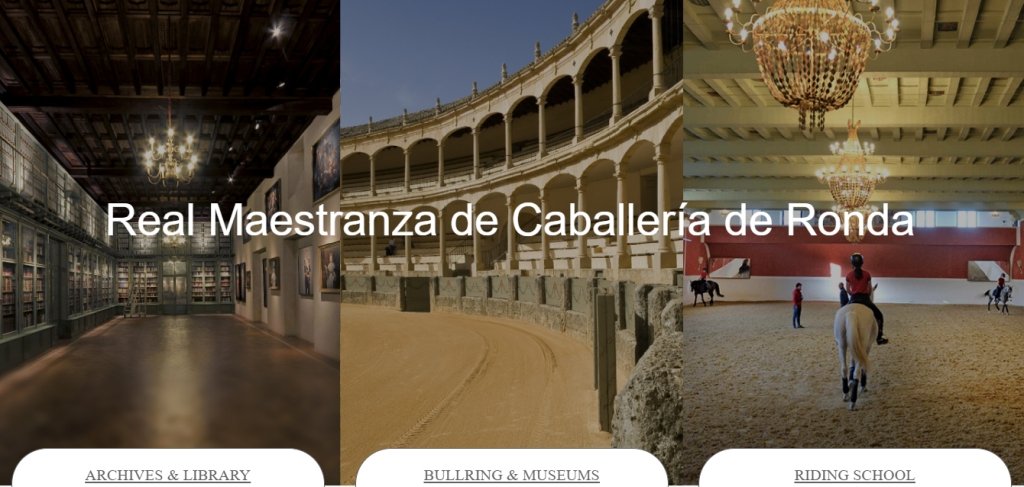
The museum charts bullfighting from it’s early days to the present with exhibitions of photos and items used in bullfighting. The other half of the museum covers the training of cavalry, which is the actual purpose of the Real Maestranza, and includes exhibits of weaponry and armour used through the ages. Visit the Real Maestranza website.
Lara Museum, Calle Armiñan.
The Lara Museum is an unusual collection of antiques collected by Juan Lara Jurado, the founder of the museum. The collection has been put together into galleries that might not seem immediately related but actually takes the visitor on a journey through science history of the last few hundred years.
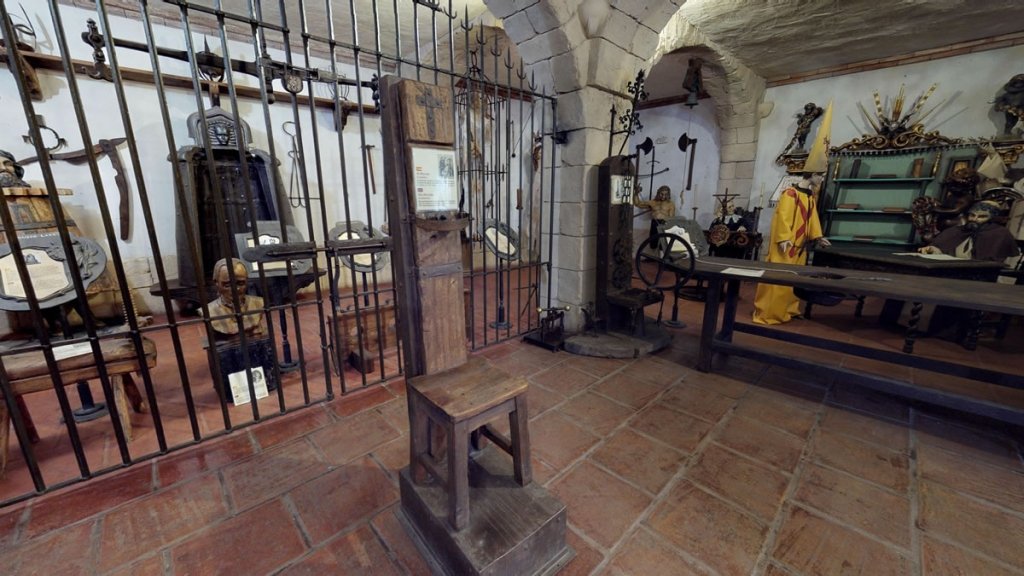
Displays on weaponry including pistols, knives, and catapults, sit side by side with displays on clocks, scientific instruments, cinema and photography and much more. Exhibits capture the imagination and despite some of the bloodlust such the displays on bullfighting or inquisition torture instruments, the Museum is actually quite child friendly. Visit the Lara Museum website.
Hunting Museum, Calle Armiñan.
This is an unusual museum, and tends only to attract diehard hunting fans with it’s displays of guns, pictures of hunters and their catch, and of course taxidermy of animals hunted in the countryside surrounding Ronda and worldwide afield by Spanish hunters.
Expect a lot of dead animals and heads stuck on the wall.
The Museum also helps organise hunting expeditions. A shop with hunting supplies is also on site. (no website)
The Bandit Museum. (Closed and relocated)
Sadly this museum has closed its doors in Ronda and has relocated to the town of El Borge in the province of Málaga.
The only museum dedicated to bandits and highwaymen in Spain, this is a real experience of Ronda history not to be missed. Back in the 1800s bandits roamed the hills and valleys of the Serrania, and became so powerful in Andalucia the government in Madrid in 1844 ordered the creation of the Guardia Civil to put an end to their thieving ways. As late as the 1930s isolated pockets of bandits were still robbing wealthy travellers on their way to Ronda.
The 1950s saw a small resurgence of banditry as communists and socialists opposed to General Franco’s regime waged a guerilla war from many of the same caves previously used by the bandits. The museum itself traces the stories of these folk legends from anecdotes and official court testimony, and is an important place of research for academics and writers interested in the psychology of the bandit. Visit the Bandit Museum website.
Interpretation Centre for the New Bridge (Puente Nuevo)

Have you ever wanted to be inside the New Bridge, looking out the window at the valley below, imagining what it must have been like to be a prisoner shackled beneath the traffic, so near to the life you knew, but so far from it as well?
Views of the Parador Hotel and the hanging houses seem so much better when looking from down on the landing below.
Museum of Wine
Archeological evidence suggests Ronda was a favoured wine growing district from Roman times, and probably a lot earlier, and whilst the number of commercial vineyards around Ronda is small, the industry is expected to grow.

The wine museum in Ronda traces the history of wine making from neolithic times, through Roman, Visigothic, and Arab time to the present. Visit the Museum of Wine website.
If you would like to visit a wine company we have the information you need here.
Museum of Joaquin Peinado
Born in Ronda, Joaquin Peinado is one of the most influential painters of the early 20th century, and one of the leading lights of Spanish contemporary art.

Sadly Peinado passed away in 1975, long before the museum in his honour was created. Located in the Moctezuma Palace in La Cuidad, the building is a fitting home for one of Ronda’s greatest sons.
Visit the Museum of Joaquin Peinado website
Rilke Museum, Hotel Reina Victoria
Rainer Maria Rilke, described as one of the German world’s greatest poets, spent three months in Ronda at the end of 1912 and beginning of 1913, staying at the Hotel Reina Victoria. It was while here that he wrote part of his 6th Elegy and the “Spanische Trilogie”.

Room 208 at the Hotel Reina Victoria used to hold a small museum honouring Rilke’s connection with Ronda but sadly this seems to have been removed now.
FAQ: Museums of Ronda – History, Art, and Cultural Highlights
Ronda’s museums span a wide spectrum—art, archaeology, bullfighting, science, wine, and history. Some are housed in historic buildings like the Palacio de Mondragón and the Plaza de Toros. Key institutions include the Ronda Municipal Museum, Real Maestranza Bullfighting Museum, Joaquín Peinado Art Museum, Lara Museum and the Wine Museum. These museums highlight Ronda’s role in Andalusian history and offer rich, immersive experiences.
The Lara Museum is ideal for families. Its wide-ranging exhibits—including antique weapons, scientific instruments, vintage clocks, early cinema, and curious oddities—keep both children and adults entertained. While some displays (like those on torture or the Inquisition) may be intense for younger kids, the museum’s variety and hands-on feel make it appealing to most age groups.
Located inside the elegant Mondragón Palace, the Ronda Municipal Museum offers a chronological journey through Ronda’s history:
Stone Age and Pileta Cave: Includes a model of a prehistoric dwelling.
Iron Age: Features sword-making and other technologies.
Roman Ronda & Acinipo: Displays artefacts from nearby archaeological sites.
Moorish Ronda: Includes Islamic burial customs and architectural fragments.
17th–18th century Ronda: Highlights life during Ronda’s historic peak.
The museum balances archaeology with cultural storytelling, making it a must-see for history lovers.
This museum inside Ronda’s legendary Plaza de Toros dives deep into:
The evolution of Spanish bullfighting, especially the “Rondeño” style created by the Romero family.
The rise of famous bullfighters like the Ordoñez family.
The history of the Real Maestranza de Caballería, a cavalry school established in 1572 that trained Spanish nobles.
Displays of weaponry, uniforms, saddles, and historic art related to bullfighting and military life.
It’s one of the most comprehensive museums of its kind in Spain.
Yes, the Museum of Wine (Centro de Interpretación del Vino) showcases:
Ronda’s 5,000-year-old winemaking history, spanning Neolithic, Roman, and Arab eras.
Antique tools, amphorae, and presses.
A guided wine-tasting experience with options to sample local red, white, and rosé wines.
It’s located in a restored winery, combining education with sensory enjoyment.
The Joaquín Peinado Museum, located in the 17th-century Palacio de Moctezuma, celebrates one of Ronda’s most prominent modern artists. A contemporary of Picasso, Peinado was known for his Cubist and post-Impressionist influences. The museum holds:
Over 190 original paintings, drawings, and sketches.
Temporary exhibitions on Spanish and European art.
It’s a hidden gem for modern art enthusiasts visiting Ronda.
The Bandit Museum once chronicled Spain’s 19th-century outlaws, especially those from the Serranía de Ronda. Exhibits included:
Stories of notorious bandits.
Police records and weapons.
Guerrilla fighters from the Franco era.
Though historically popular, the museum closed in Ronda and relocated to El Borge in Málaga province. It no longer operates within the city.
Yes, beyond the main highlights:
The Hunting Museum explores Spain’s sporting traditions with animal exhibits and vintage gear.
The Don Bosco House Museum features period furnishings, ceramics, and lush gardens with panoramic gorge views.
The Wine Interpretation Centre and Lara Museum each offer unique angles on regional culture.
Museum prices vary:
Lara Museum, Wine Museum: €3.50–€4.
Bullring Museum: ~€8.
Peinado Museum: ~€4; free for children under 14.
Ronda doesn’t currently offer an all-in-one museum pass, but many locations offer free entry on certain days or for EU citizens. Check with the tourist office or museum websites for discounts.
Use the VoiceMap GPS Audio Guide for Ronda narrated by Clive (your guide!). This downloadable tour:
Starts at Alameda del Tajo.
Passes Puente Nuevo, Mirador de Ronda, the Arab Baths, and the Bullring.
Ends at Plaza de Toros, incorporating museum locations into a walkable route.
This is perfect for visitors who want a mix of guided storytelling and independent exploration.

I’ve been living in this lovely area of Western Andalucia for the last 20 years or so and dedicate most of my time to the running of English language tourist information websites for the towns of Cádiz, Ronda, Grazalema, the famous or infamous Caminito del Rey, and also Wildside Holidays, which promotes sustainable and eco-friendly businesses running wildlife and walking holidays in Spain. My articles contain affiliate links that will help you reserve a hotel, bus, train or activity in the area. You don’t pay more, but by using them you do support this website. Thankyou!
5 thoughts on “Museums of Ronda”